HMO communal cleaning standards and licensing
Keeping communal areas clean is a licence condition for an HMO, not a courtesy, and failing it can put the licence itself at risk. Here is what councils require in plain terms, where the responsibility sits between landlord and tenant, and how to prove the standard when an officer inspects.

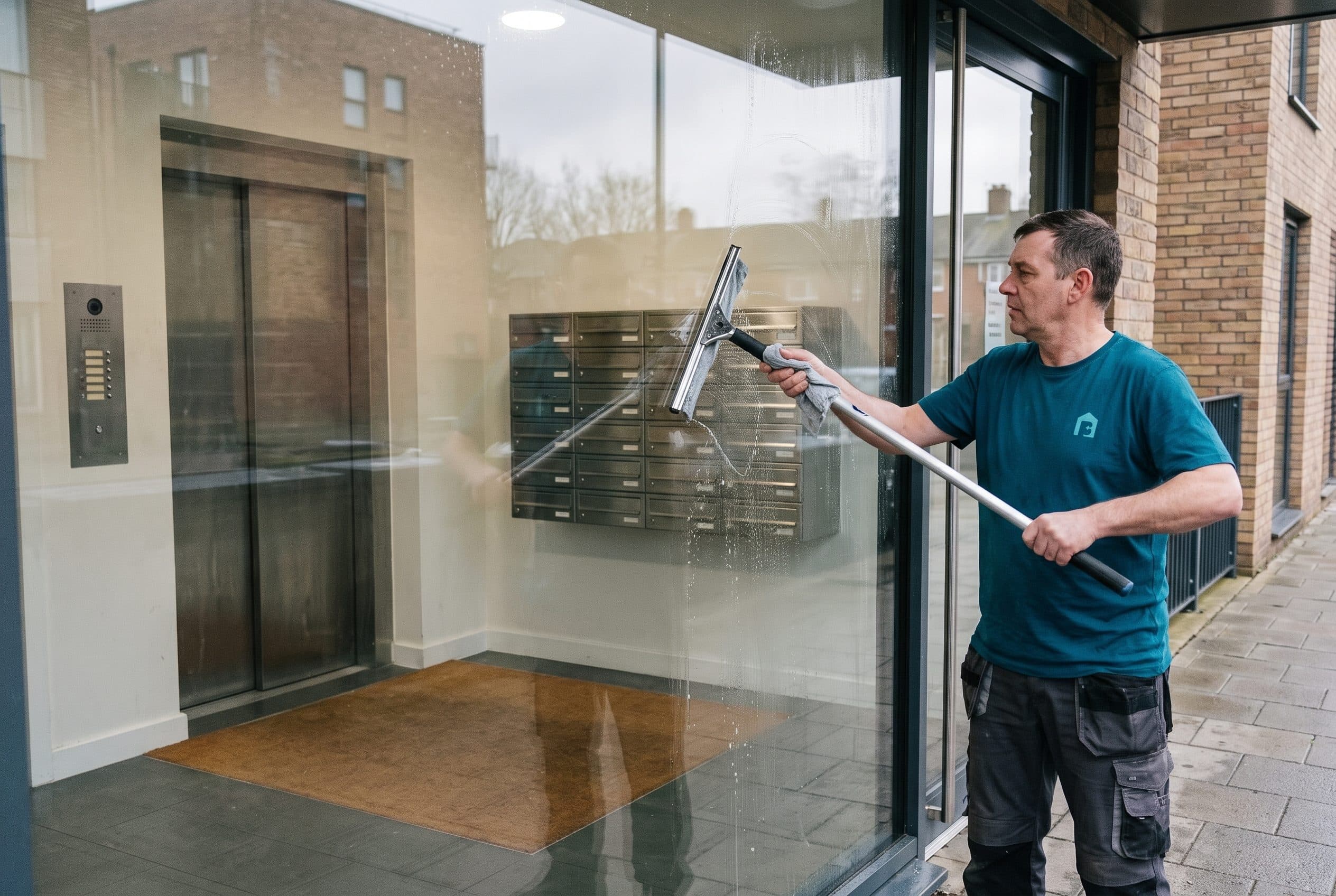
The standard for communal areas in a licensed HMO is set by the council through the licence conditions and enforced under the Housing Act and the HMO management regulations. In plain terms, the landlord must keep shared parts clean, safe and in good repair, and the council can inspect to check it. This is not guidance you can take or leave. A breach is a breach of the licence, and persistent failures can lead to enforcement and, at the far end, loss of the licence.
The regulations that sit behind this require the person managing the HMO to keep common parts clean and in good order, alongside safety duties. Councils translate that into the conditions on your specific licence, so the precise wording varies, but the direction does not: shared spaces are your responsibility to keep to a clean, safe standard, and to be able to show it.
What councils actually require
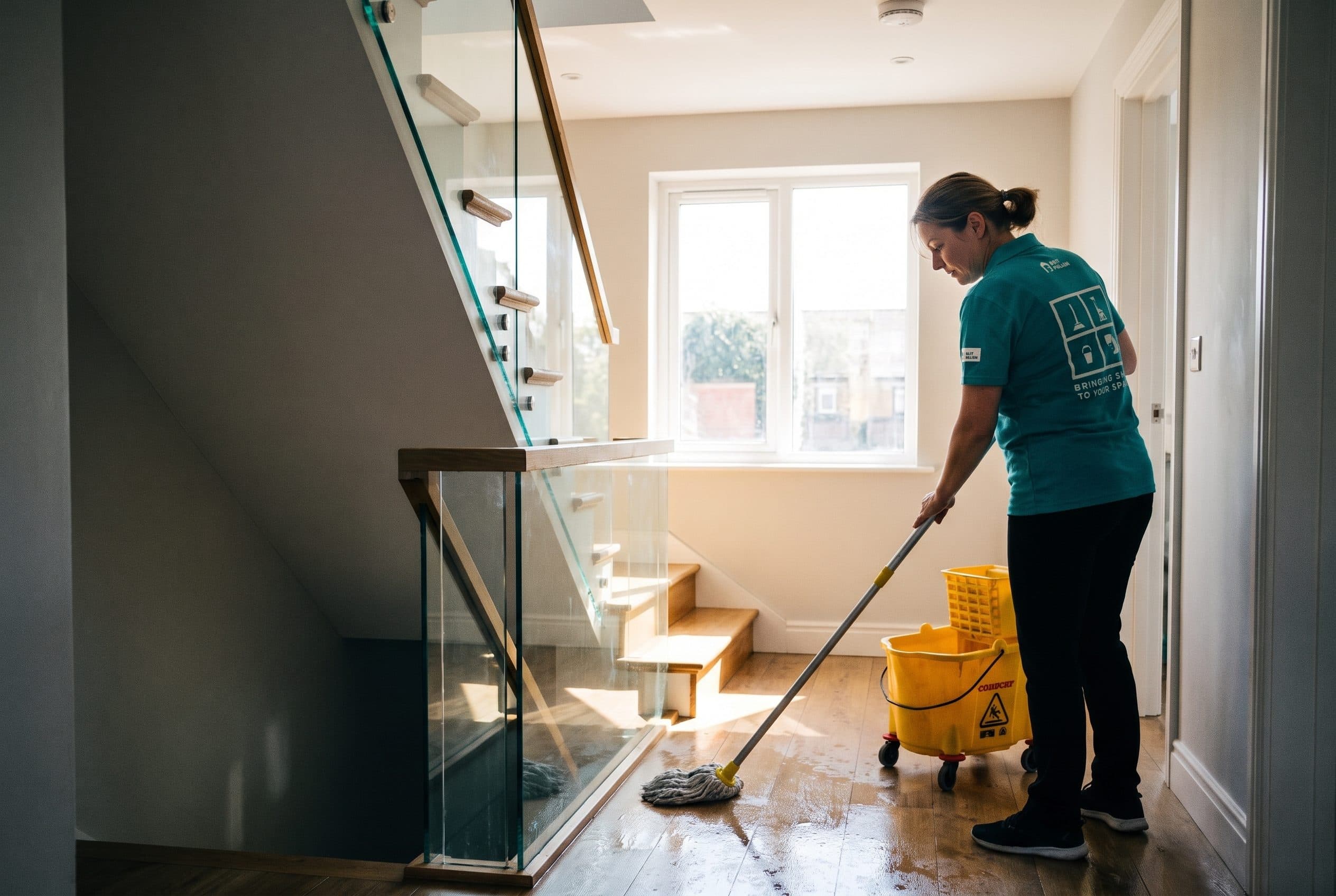
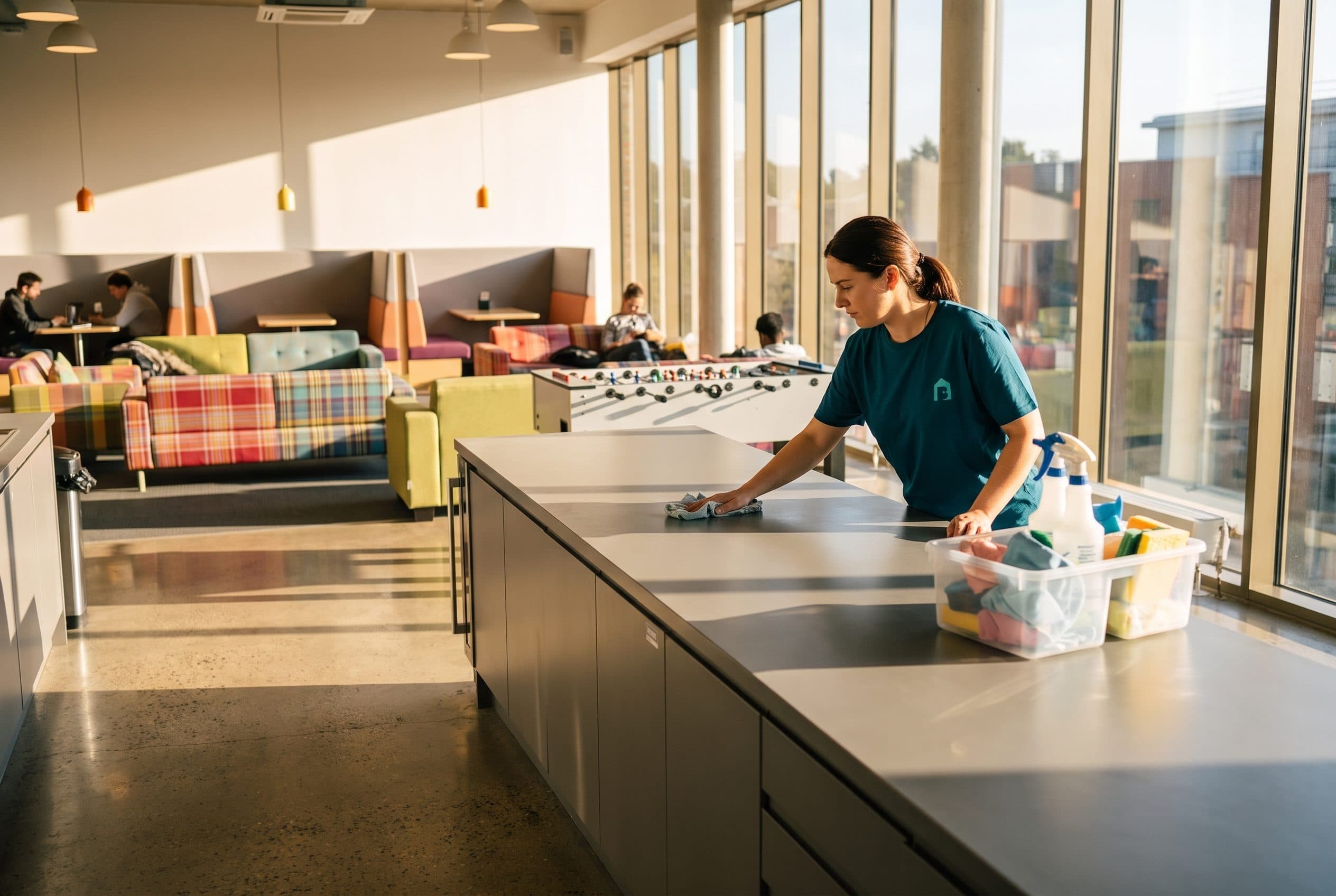
The common requirements are consistent even where the wording differs. Shared kitchens and bathrooms kept clean and hygienic, because these are where the health risks concentrate. Halls, stairs and landings kept clean and clear, which also ties into fire safety, since a cluttered escape route is a separate and serious breach. Bin and refuse areas managed so they do not attract pests. And often a cleaning schedule in place, sometimes displayed in the building.
Landlord or tenant responsibility
The licence holder carries the legal responsibility for communal areas, full stop. You can ask tenants to keep shared spaces tidy through the tenancy agreement, and many landlords do, but the council holds the licence holder accountable, not the tenants, when a communal area fails. Relying on tenants to clean shared kitchens and bathrooms in a busy HMO is the most common way landlords end up in breach, because shared responsibility in practice means nobody does it.
You can ask tenants to keep communal areas tidy. You cannot pass the licence obligation to them. When it fails, the council comes to the licence holder.
Evidencing the standard at inspection
An inspecting officer is checking two things: that the areas are clean now, and that there is a system keeping them that way. Meeting the first without the second is fragile, because one bad week fails the inspection. A documented schedule that is actually followed, with dated records or photographs, is what turns a spot check into a demonstrable standard, and it is the difference between a pass and an improvement notice.
The practical setup is a booked clean at a set frequency, a record of each visit, and the schedule available to show. It protects the licence, it answers the officer before they ask, and it takes the shared-space problem off the tenants, who were never going to solve it reliably anyway.
We clean HMO communal areas to a documented standard and send a dated record of every visit, so an inspection finds both a clean building and the system behind it. Tell us about your HMOs.